

The Road to 2030: Can the UK Deliver a Clean Power System?
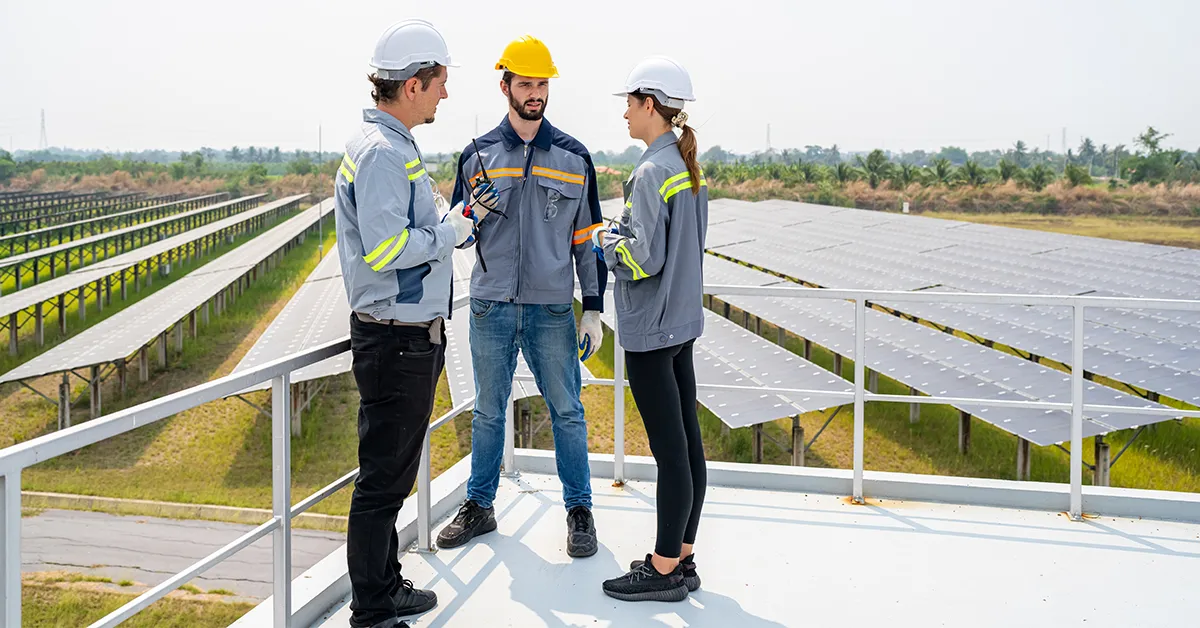
Part Two: The People, Investment and Innovation Shaping the Future
If Part One highlighted the systems that need to evolve, from grid infrastructure to planning reform, there is another part of the conversation that receives far less attention despite underpinning almost every project currently being developed across the UK.
People.
The clean energy transition is often discussed in terms of technology. New wind farms, larger battery storage facilities and smarter electricity networks tend to dominate the headlines. Yet behind every project is an industry responsible for designing, financing, constructing, connecting and operating those assets, often over many years.
As the pace of development has increased, so too has demand for the people capable of delivering it.
Development managers, grid specialists, project engineers, planners, environmental consultants, commercial professionals, construction managers and asset managers all play a role in moving projects from concept to operation. Many of these skillsets
have always been valuable, but today they are becoming increasingly difficult to find as organisations compete for experienced professionals across a growing pipeline of work.
This is not unique to the UK, nor is it unexpected. Major infrastructure programmes have always relied on highly specialised expertise. The difference today is the scale of activity taking place simultaneously. Offshore wind, onshore renewables, battery storage, transmission upgrades and emerging technologies are all competing for many of the same people.
For businesses, that has changed the conversation around hiring. Building the right team is no longer simply about filling vacancies as projects progress. It has become an important part of long-term business planning, particularly for organisations looking to grow alongside the market.
Investment continues to support long-term growth
While discussions around Clean Power 2030 often focus on the challenges still to overcome, it is equally important to recognise what has remained remarkably consistent throughout the transition: investor confidence.
Renewable energy has established itself as one of the UK’s most attractive long-term infrastructure markets. Institutional investors, infrastructure funds, pension capital and major energy companies continue to back projects across generation, storage
and electricity networks, reflecting confidence not only in individual technologies but in the long-term direction of the sector itself.
That confidence has been reinforced by mechanisms that have helped provide greater certainty for developers and investors alike. The UK’s Contracts for Difference programme has played a significant role in supporting renewable deployment over the past decade, while corporate Power Purchase Agreements have become an increasingly common route for businesses looking to secure long-
term renewable electricity supplies.
Markets inevitably experience periods of uncertainty. Supply chains fluctuate, financing conditions change and policy evolves. Yet the underlying investment case for clean energy remains compelling because demand for reliable, low-carbon electricity continues to grow.
In that sense, investment is not waiting for 2030. It is already shaping the infrastructure that will define the UK’s electricity system well beyond it.
Innovation is changing the conversation
Renewable generation may receive much of the public attention, but some of the most significant developments are happening behind the scenes.
Battery energy storage has become a central part of the electricity system, helping to balance supply and demand as larger volumes of renewable generation come online. Digital technologies are giving operators greater visibility across increasingly complex networks, while advances in forecasting and data analytics are improving the way electricity systems respond to changing conditions throughout the day.
AI is also beginning to influence areas such as network planning, predictive maintenance and asset performance, providing operators with new tools to manage infrastructure more efficiently.
None of these technologies remove the need for investment in physical infrastructure, nor do they eliminate the challenges associated with grid connections or planning. What they do offer is greater flexibility, allowing the electricity system to operate more efficiently as renewable generation continues to expand.
The transition is no longer being driven by a single technology. It is the result of multiple innovations working together, each solving a different part of the puzzle.
The challenges have not disappeared
Despite the progress made across the sector, it would be unrealistic to suggest the path towards Clean Power 2030 is straightforward.
Delivering major infrastructure at scale has never been simple. Supply chains remain under pressure in parts of the market, major transmission projects take years to deliver and maintaining policy certainty will continue to influence investment
decisions.
The sector must also continue expanding the workforce needed to support future growth while ensuring new entrants have opportunities to develop the specialist skills that will be required over the coming decades.
None of these challenges are solely connected to the UK’s clean energy transition. They are characteristics of large infrastructure programmes around the world.
Perhaps the difference today is that they are being tackled within an industry that has already demonstrated its ability to adapt at pace. The renewable energy market of 2026 bears little resemblance to that of a decade ago, and there is every reason to believe the next ten years will bring equally significant change.
Looking beyond 2030
It is tempting to view 2030 as the point at which success or failure will be judged.
The reality is more complex.
Electricity systems do not transform overnight, and they are rarely built to align neatly with political or policy milestones. Infrastructure is developed over decades, technologies continue to improve and markets evolve in response to changing
demand.
The significance of Clean Power 2030 lies not simply in the date itself, but in what the ambition has encouraged the industry to do.
It has accelerated investment in renewable generation and supporting infrastructure. It has prompted reforms to grid connections and planning processes. It has encouraged businesses to think more strategically about technology, resilience and long-term workforce planning.
Perhaps most importantly, it has given organisations across the sector a common objective around which to plan, invest and collaborate.
Whether every milestone is delivered precisely on schedule will remain a topic of debate for years to come. What matters just as much is ensuring the systems, infrastructure and expertise developed along the way continue supporting the UK’s
electricity network for decades after 2030 has passed.
So, will the UK deliver clean power by 2030?
After exploring the opportunities and challenges across this series, it becomes clear that there is no simple answer.
The UK has made remarkable progress over the past decade. Renewable generation continues to expand, battery storage has matured rapidly, investment remains strong and reforms are underway to improve the way projects move through planning and connect to the electricity network.
At the same time, important work remains. Grid infrastructure must continue to evolve, planning processes need to support the pace of development and businesses across the sector will need access to the skilled professionals capable of
delivering increasingly ambitious projects.
Perhaps the better question is not whether the UK reaches every aspect of Clean Power 2030 by a specific date.
It is whether the industry continues solving the challenges that stand between today’s electricity system and tomorrow’s.
Judged through that lens, the picture is encouraging.
The industry continues to attract investment. Innovation is creating new opportunities across generation, storage and digital infrastructure. Businesses are expanding, technologies are maturing and projects that would have seemed ambitious only a
decade ago are now becoming part of the UK’s energy landscape.
The journey towards clean power has never been about a single announcement or a single year. It is the result of thousands of decisions made every day by developers, engineers, investors, network operators, policymakers and the many other
professionals working across the sector.
Whether the destination arrives exactly on schedule or shortly afterwards, one thing already feels certain.
The transition is no longer a future ambition.
It is well underway.

Get In Touch
Contact us for a great photography session & beautiful captured moments